Science Lab
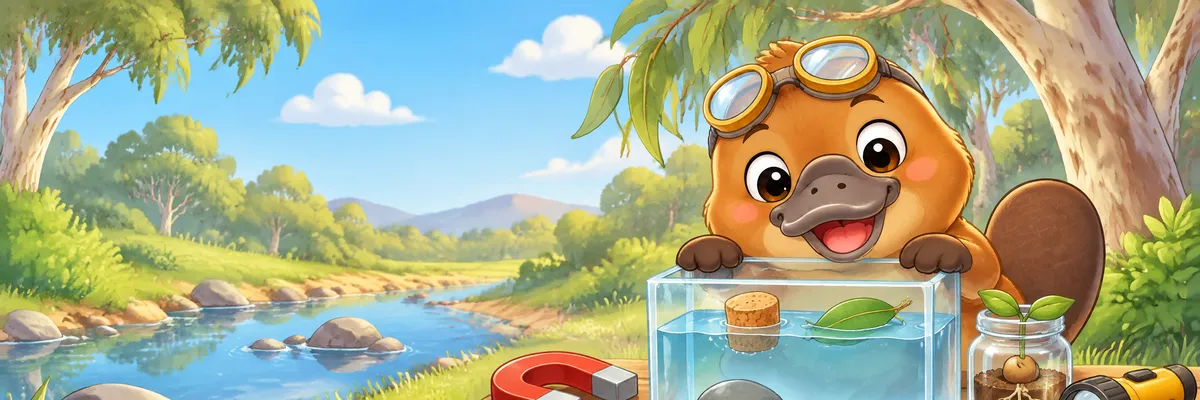
Guess, then watch: drop things in the tank to see what floats, test what the magnet picks up, match animals to their shadows, and put changes in order, like ice melting and a bean growing.
Let's be scientists!
For grown-ups: what each one teaches
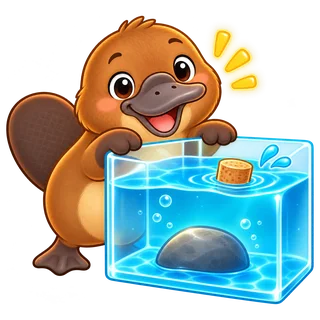
- Sink or Float? (ages 3–6). Guessing first, then looking. Things that are light for their size float; things that are heavy for their size sink. For grown-ups
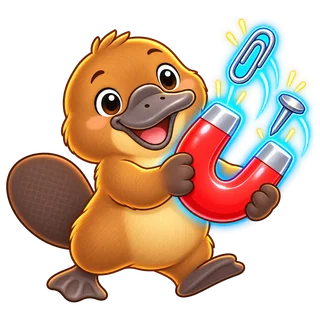
- Magnet Hunt (ages 3–6). Testing a guess: magnets pick up things with iron in them, but not wood, plastic or even foil. For grown-ups
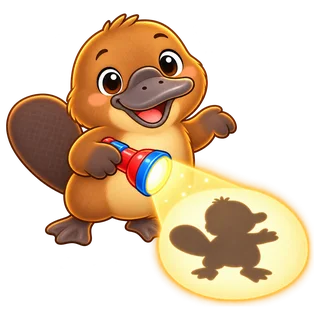
- Whose Shadow? (ages 2–5). Shapes and shadows: a shadow is where something blocks the light, so it keeps the outline. For grown-ups
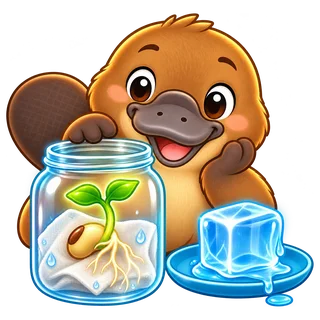
- What Happens Next? (ages 4–7). Changes, in order: ice melting, a puddle drying up, a bean growing roots, a shoot, then leaves. For grown-ups
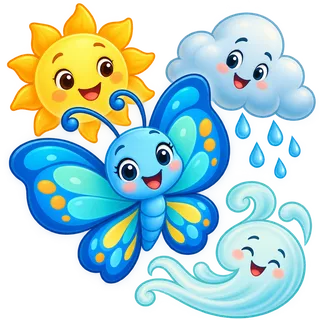
- Butterfly's Weather (ages 3–6). Weather words, and what to wear: sunny and rainy, windy and calm, hot and cold.
Away from the screen
Fill the sink or the bath and guess together: will the spoon float? The orange? The toy boat with three pegs in it? Then try it. In the dark, a torch and your hands make a shadow wombat, or a shadow emu.
Try it at home
Sink or float in the bath
You need: A bath or a sink of water, and things from around the house: a spoon, a cork, a leaf, a ball, a toy, a block.
- Feel each thing first. Guess together: float or sink?
- Put it in and watch. Try it a different way up.
- Make two piles: floaters and sinkers. What do the floaters have in common?
Talk about: Things that are light for their size float; heavy for their size sink. A golf ball and a ping-pong ball are the same size, but only one floats. (Questacon)
A bean in a jar
You need: A clear jar or container, paper towel, a few dried beans, and a spray bottle of water.
- Scrunch damp paper towel into the jar and tuck the beans against the side, where you can see them.
- Spray until the towel is damp, not swimming. Put it somewhere sunny.
- Look every day. Roots come first (about two or three days), then a shoot (about a week), then leaves.
Talk about: Which grew first, the root or the shoot? Which way did the root go? (Health and Wellbeing Queensland)
Shadow puppets with a torch
You need: A dim room, a torch (a phone torch works), a pale wall, and hands or toys.
- Shine the torch at the wall.
- Make shapes with your hands or toys between the torch and the wall.
- Move closer to the torch, then further away. What happens to the shadow?
Talk about: Closer to the light, the shadow grows bigger. Try see-through things too, like cellophane. (Questacon)
Safety: Small, strong magnets are dangerous if swallowed: two can pull together inside the body. Use a big fridge magnet, together, and keep small magnets away from young children. If you think a child has swallowed a magnet, get urgent medical help. Water play is always with a grown-up. ACCC Product Safety Australia.
Every fact, and where it comes from
Everything Ruby Roo says in these games was checked against the page it links to, written for grown-ups to read.
- When the first platypus specimens reached Britain, scientists were so astonished they thought it was an elaborate hoax, a duck's beak stitched onto a mole. Looking again, and checking, is what science is. (Australian Museum)
- Whether something floats depends on its density, how heavy it is for its size. A golf ball and a ping-pong ball are about the same size, but the golf ball is much denser, so it sinks. (Questacon)
- Questacon's floating and sinking activity starts the same way: feel each thing, predict float or sink, then put it in and watch. Sorting into 'sink' and 'float' afterwards, and asking what the floaters have in common, is the next step. (Questacon)
- Some metals, including iron, nickel and cobalt, are attracted to magnets. Everyday steel things (nails, screws, paperclips, bottle caps) have iron in them. (Questacon)
- Not every metal is magnetic: in Questacon's demonstration, aluminium (kitchen foil) doesn't stick. (Questacon)
- Small, strong magnets are dangerous if swallowed: two or more can pull together through the wall of the intestine. Keep them away from young children, use a big fridge magnet together, and if you think a child has swallowed a magnet, get urgent medical help. (ACCC Product Safety Australia)
- A shadow forms when an object blocks light from reaching a surface. The closer the object is to the light, the bigger its shadow. (Questacon)
- Moving an object towards the light makes its shadow bigger; moving it away makes it smaller. See-through cellophane lets some light through and makes a coloured shadow. (Questacon)
- Sunlight carries energy; when it shines on ice, some of that energy is absorbed and warms it, and the ice melts. (Questacon)
- When water is heated it changes from a liquid to a gas, water vapour: that's evaporation, and it's why puddles dry up on a sunny day. (Logan City Council)
- On damp paper towel in a sunny spot, a bean's first roots appear in about two to three days, a shoot after about a week, and small leaves a few days later. Don't flood it: damp, not swimming. (Health and Wellbeing Queensland)
What it practises
- Sorting by two things. Putting things into groups by what they look like, then by two things at once: orange and round, small and pointy.
AC9MFSP01 (Mathematics, Foundation); AC9MFM01 (Mathematics, Foundation); EYLF 4.2 (Early Years Learning Framework V2.0) - Looking and finding. For two- and three-year-olds: looking for something hidden, and knowing it's still there when you can only see a bit of it.
EYLF 4.2 (Early Years Learning Framework V2.0) - Noticing what's the same. Looking closely to find two that match.
EYLF 4.2 (Early Years Learning Framework V2.0) - Shapes. Naming and sorting circles, squares, triangles and stars.
AC9MFSP01 (Mathematics, Foundation) - Putting a story in order. Retelling a story from its pictures: what happened first, next and last.
AC9EFLE03 (English, Foundation); AC9EFLE05 (English, Foundation); AC9EFLY05 (English, Foundation) - Life cycles. How living things grow and change: egg, tadpole, frog; egg, caterpillar, chrysalis, butterfly. Life cycles are a Year 3 outcome, so this is a gentle early start.
AC9S3U01 (Science, Year 3); AC9S1U01 (Science, Year 1)
What it costs, and what we collect
Nothing, and nothing.
Updated