Reef Hide and Seek
Looking and finding, for the youngest: who's hiding on the reef, in the kelp and in the seagrass?
How it plays
For the youngest. A sea animal hides under the water, behind seagrass or coral. Your child taps where they think it is. Every tap does something, and nothing is ever wrong. First there are two hiding places with a peek, then three with a peek, then three with no peek. It's in Tiny Steps.
What it's for
Looking and finding, for the youngest: who's hiding on the reef, in the kelp and in the seagrass? There is no score to lose and no way to fail: a wrong move is met with a gentle nudge, and a level ends when it's done.
Away from the screen: Under the tea towel
About two minutes, with things most homes have.
- Put a toy under one of two tea towels while your child watches.
- Ask: where's it hiding? Let them lift a towel.
- Once they've got it, use three towels.
- Then hide it while their eyes are closed.
Three questions to ask while they play
- Who's hiding? What's its name?
- Where did it go?
- Can you hide like a crab?
Play together
Things to say or ask
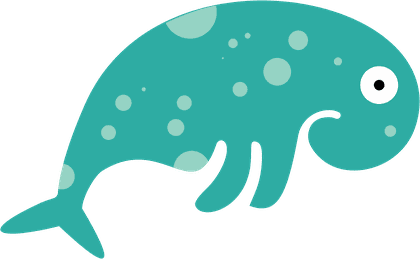
- Peekaboo! It's the dugong!
- Where did the clownfish go?
Taking turns on one device: Sit together and take turns tapping, one hiding place each.
If they find it hard
Point to where it went in before they tap, and say “It's hiding! Where is it?”. Stay on the first level with the peek for as long as they're having fun.
From two to eight
Tiny Steps: made for two- and three-year-olds too. With Tiny Steps on, it stays on its gentlest level, a not-yet tap is never counted, and there's nothing to read.
Switch Tiny Steps on in Who's playing?, on the grown-ups' page.
Every fact, and where it comes from
What Ruby Roo says in Reef Hide and Seek was checked against the page it links to.
- Anemonefish live with anemones: they are immune to the stinging tentacles, which protect them, and they remove parasites and sediment from their host. (Great Barrier Reef Marine Park Authority)
- Giant clams are the largest mollusc on earth, growing over a metre long and living for over 100 years. (Great Barrier Reef Marine Park Authority)
- Dugongs graze on seagrass meadows in sheltered coastal waters and must surface to breathe. (Great Barrier Reef Marine Park Authority)
- Weedy seadragons are found only in southern Australia, in kelp forests, seagrass meadows and sponge gardens; males carry the eggs on their tails until they hatch. (Derwent Estuary Program)
What it practises
- Looking and finding. For two- and three-year-olds: looking for something hidden, and knowing it's still there when you can only see a bit of it.
EYLF 4.2 (Early Years Learning Framework V2.0) - Australian animals. What animals look like and where they live (My animal friends cards).
AC9SFU01 (Science, Foundation); AC9S1U01 (Science, Year 1)
The codes are from the Early Years Learning Framework V2.0 (for children from birth to five) and the Australian Curriculum v9 (Foundation to Year 2). Each links to the official wording. Every skill, and the games for it.
What it costs, and what we collect
Nothing, and nothing. There is no account, no advertising and no tracking of any kind. Which games have been played is remembered on your own device and is never sent anywhere. The full version is here, and it's short.
Where it lives
Reef Hide and Seek is part of Australia's seas. It works on a phone, a tablet or a classroom screen, and once it's been opened it keeps working with no signal at all.
Updated