The Munch-Crunch Club
A 3D tour of digestion that follows one bite of apple, from the first crunch to the toilet, for children about five to eight. Free, with no ads and no sign-ups.
What your child will learn
- Digestion breaks food down into tiny bits your body can use, for energy and to grow.
- The incisors at the front bite, the molars at the back grind, and saliva makes food soft. The tongue rolls it into a ball.
- A little flap shuts over the windpipe when you swallow, and the oesophagus (the food pipe) squeezes food down in waves.
- The stomach churns food with strong juices into mush. The pancreas adds a helper juice, and bile made by the liver waits in the gallbladder.
- The small intestine is long and folded up. Millions of tiny villi soak the good stuff into the blood, which takes it to the liver.
- The large intestine soaks up water, and what's left is poo. Farts are air, and everybody has them.
How it works
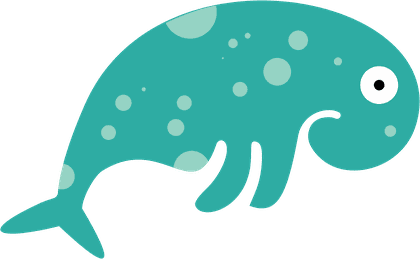
Story. A dugong tells it in eight short chapters. The camera follows one bite of apple (it wears an orange ring) as it's chewed, swallowed, churned and squeezed along. A close-up shows the villi, where the Lub-Dub Club's blood cell drops by. The poo and the fart are friendly cartoons. Every word is spoken and shown.
Explore. Turn the body round, peek inside the stomach, follow a bite of apple all the way through, or tap any part to hear what it does. What's this? shows the parts one at a time, including a close-up of the villi.
Quiz. Six picture questions, read aloud, so it works before your child can read. A wrong answer greys out and they have another go; nothing is ever lost. Finishing brings a new animal for their My animal friends book, and a card of the words they now know.
The real words it teaches
The tour uses the real names for the parts, and says what each one means the first time. These are on the card at the end, and a tap on each says what it means. The pancreas, liver and gallbladder are named in the story and in Explore, but kept off the card.
- Digestion: how your body breaks food down, to give you energy and help you grow.
- Incisors: your front teeth. They bite, like scissors.
- Molars: your back teeth. They grind food up.
- Saliva: your spit. It makes food soft.
- Oesophagus: your food pipe, from your mouth to your stomach.
- Small intestine: the long, twisty tube where the good stuff goes into your blood.
- Villi: millions of tiny fingers that soak up the good stuff.
- Large intestine: the big tube that soaks up water.
What it practises
- My body. Naming the parts of the body, and how they work: from knees and elbows (Head to Toe) to the heart's atria and ventricles (the What Makes Me tours).
AC9S1U01 (Science, Year 1); AC9HPFM03 (Health and Physical Education, Foundation)
The codes are from the Australian Curriculum v9 (Foundation to Year 1). Each links to the official wording. Food and water are basic needs children learn about in Year 1; the tour shows what happens to food after you eat it.
Things to try together
- Count your teeth in a mirror, top and bottom. Most children have twenty baby teeth.
- Put a hand gently on your throat and swallow. Can you feel it move?
- Eat a slice of apple slowly and count the chews before you swallow.
- After a meal, put an ear to a grown-up's tummy and listen for the gurgles.
- The sheet to print has the tummy to label, a maze from the mouth to the toilet, and boxes for counting teeth.
The tour's advice is only about chewing well, drinking water and brushing teeth twice a day. It doesn't call any food good or bad.
What's simplified, and why
- The small intestine is drawn far shorter than a real one, folded neatly so the bite can be followed.
- We follow one bite of apple. Real food mixes with everything else you've eaten.
- The villi are shown hugely enlarged, in one small patch.
- The poo and the fart are cartoons.
- The poo drops away to a door with a toilet sign; the body's way out isn't shown.
- The liver's other jobs belong to its own tour; here it only makes bile and takes the apple's sugar.
- The close-up shows one red blood cell going through one villus; really, lots of cells go through every villus all the time.
Where the facts come from
Every fact the tour states was checked against the page linked beside it.
- The digestive system helps your body break down food and absorb nutrients for energy and growth.
In the tour: It's called digestion. It breaks your food down into tiny bits, to give you energy and help you grow.
healthdirect — Digestive system - Children have 20 baby teeth by about age 3; adults have 32.
In the tour: Children have twenty baby teeth.
Better Health Channel — Teeth - Incisors bite together like a pair of scissors; molars have big flat surfaces to grind food.
In the tour: Your incisors at the front bite, like scissors. Your molars at the back grind it up.
Better Health Channel — Teeth - Brush twice a day, in the morning and at night before bed.
In the tour: Brush your teeth twice a day, in the morning and at night.
Better Health Channel — Teeth - Saliva makes food mushy and easy to swallow, and the tongue pushes the food around.
In the tour: Saliva, your spit, makes it soft and mushy. Your tongue rolls it into a little ball.
KidsHealth — Your Digestive System - The epiglottis closes over the windpipe when we swallow.
In the tour: It shuts over your windpipe, so the food goes the right way.
KidsHealth — Digestive System (for parents) - Muscles in the oesophagus squeeze food down in waves; it takes about 2 or 3 seconds.
In the tour: It squeezes the food down in waves. That only takes a few seconds!
KidsHealth — Your Digestive System - The stomach churns and mixes food with digestive juices containing acids and enzymes.
In the tour: Your stomach churns the food with strong juices, and mashes it into mush.
KidsHealth — Digestive System (for parents) - Tummy rumbles come from muscle waves moving food, liquid and air along.
In the tour: That gurgle? That's your tummy working!
The Conversation — Curious Kids: what are tummy rumbles? - An adult's small intestine is about 5 metres (healthdirect) to 6.7 metres (KidsHealth) long.
In the tour: A grown-up's would be longer than a car if you stretched it out!
healthdirect — Digestive system - The pancreas makes juices that help digest fats and protein; bile from the liver helps with fats, and the gallbladder stores bile.
In the tour: Your pancreas squirts in a helper juice… your liver makes bile, which waits in the gallbladder.
KidsHealth — Your Digestive System - The small intestine is lined with millions of finger-like villi.
In the tour: The small intestine is lined with millions of tiny fingers called villi.
KidsHealth — Digestive System (for parents) - Sugars, proteins, fats, vitamins and minerals pass through the small intestine's wall into the blood.
In the tour: They soak the good stuff from our apple into your blood.
healthdirect — Digestive system - The portal vein carries blood from the stomach and intestines to the liver, which processes the nutrients before the blood goes back to the heart.
In the tour: And the blood carries the apple's sugar away, off to your liver.
Cleveland Clinic — Portal vein - Red blood cells carry oxygen; plasma, the liquid part of the blood, carries nutrients.
In the tour: It drops off oxygen for your tummy… the blood carries the apple's sugar away.
healthdirect — Blood - The large intestine absorbs water, minerals and some vitamins.
In the tour: It soaks up the water, so the leftovers get drier.
healthdirect — Digestive system - Farts are gas: swallowed air, and gases made as food is broken down in the large intestine. Everyone farts, and it's normal.
In the tour: Some air sneaks along too. Parp! That's a fart. Everybody farts!
KidsHealth — What's a fart? - What's left is solid waste, which leaves the body when you go to the toilet.
In the tour: And what's left is poo. It comes out when you go to the toilet.
KidsHealth — Your Digestive System
Every word it says
The whole script, for reading along, or for a child who'd rather read than listen.
1. Munch time
- Hello! I'm Dugong. I munch seagrass all day long!
- When you eat, your food goes on a long journey through your body.
- It's called digestion. It breaks your food down into tiny bits, to give you energy and help you grow.
- Let's follow one bite of apple. See the ring? That's our bite.
2. Chomp!
- Chomp! Your incisors at the front bite, like scissors.
- Your molars at the back grind it up.
- Saliva, your spit, makes it soft and mushy.
- Your tongue rolls it into a little ball, and pushes it to the back.
- Children have twenty baby teeth. Can you count yours in a mirror?
3. Gulp!
- Remember the little flap from the Huff-Puff Club? Whipbird does!
- Gulp! It shuts over your windpipe, so the food goes the right way.
- This is your oesophagus, your food pipe.
- It squeezes the food down in waves. That only takes a few seconds!
4. The mixer
- Plop! Into your stomach, a stretchy bag.
- Your stomach churns the food with strong juices, and mashes it into mush.
- That gurgle? That's your tummy working!
5. The long, twisty tube
- Next, the small intestine. It's folded up in your tummy, like a long garden hose.
- Your pancreas squirts in a helper juice to break the food down.
- And your liver makes bile, which waits in the gallbladder until it's needed.
- A grown-up's would be longer than a car if you stretched it out!
6. Tiny fingers
- Let's look really closely! The small intestine is lined with millions of tiny fingers called villi.
- The good stuff from our apple, like its sugar, soaks into the villi and into your blood.
- Here comes our friend from the Lub-Dub Club! It drops off oxygen for your tummy, and turns blue.
- And the blood carries the apple's sugar away, off to your liver. Bye!
7. The big tube
- What's left goes into the large intestine, the big tube round the edge.
- It soaks up the water, so the leftovers get drier.
- Some air sneaks along too. Parp! That's a fart. Everybody farts!
- And what's left is poo. Plop! It comes out when you go to the toilet.
8. Look after your tummy
- Chew your food well, and drink plenty of water.
- Brush your teeth twice a day, in the morning and at night.
- Thanks for munching with me. Welcome to the Munch-Crunch Club!
The quiz
Quiz time! Let's see what you remember. The right answers are in bold.
- Which teeth grind your food at the back? (Your incisors / Your molars / Your tongue)
- What makes food soft and wet in your mouth? (Sand / Sticky tape / Saliva)
- What's another name for your oesophagus? (Your food pipe / Your windpipe / Your backbone)
- What does your stomach do? (Pumps blood / Churns food into mush / Makes your voice)
- Where does the good stuff go into your blood? (The villi, in the small intestine / Your teeth / Your nose)
- What does the large intestine soak up? (Air / Sunshine / Water)
Big Steps: two harder questions
With Big Steps on, for seven- and eight-year-olds, two harder questions follow the six, each about a fact the tour states:
- What lines your small intestine, like millions of tiny fingers? (Teeth / Villi / Bubbles)
From: KidsHealth — Digestive System (for parents) - Where does blood from your stomach and intestines go first, before it goes back to your heart? (Your brain / Your feet / Your liver)
From: Cleveland Clinic — Portal vein
For every child
- Every word is spoken and written, so it works with the sound on or off.
- It works with a keyboard: the arrow keys turn the body in Explore, and What's this? steps through the parts.
- If your device asks for less motion, the camera cuts instead of flying, the chewing and churning are gentler and the confetti stays still.
What it needs, and what we collect
A recent browser on a phone, tablet or computer. The first visit downloads about 8 MB, and after that it keeps working with no signal. Nothing about your child is collected: the My animal friends card and the sound setting are kept on your own device. The privacy page has the whole story.
More in the series: What Makes Me, with the Lub-Dub Club and the Huff-Puff Club.
Updated